ChatGPT for SEO review: strengths and limits
Last updated: October 10, 2026
Key Takeaways
- ChatGPT drafts text and reorganizes notes fast, which helps with SEO work that starts with words.
- Strong at first drafts, structure, and repetition.
- It struggles with the parts of SEO that depend on strategy, not writing.
- Best when the task is narrow and the quality bar is clear.
Quick Answer: ChatGPT for SEO review: strengths and limits come down to one number: it is useful for the 3 middle steps of a workflow—outlining, variant generation, and cleanup—but not for the 3 highest-risk steps of keyword choice, fact verification, and final publication. In practice, that means we treat it as an assistant, not an authority. ChatGPT for SEO review: strengths and limits is the right frame for using it well.
In short: ChatGPT is best for first drafts, outlines, meta copy, and pattern-based SEO chores; it is not a reliable source of truth for rankings, search volume, or page-by-page intent. So we would use it as a writing assistant, not as the person making keyword decisions or publishing claims.
We built this ChatGPT for SEO review: strengths and limits article from the published capabilities of OpenAI’s ChatGPT, the current product documentation, and the limits that matter most in SEO work: factual accuracy, source traceability, and consistency under editorial review. According to OpenAI, ChatGPT is a general-purpose assistant, not a search console, and Google Search Central’s guidance on helpful content still puts usefulness ahead of polish. OpenAI Help Center and Google Search Central both support that distinction. (Source: OpenAI Help Center | Google Search Central)
How we chose
This is a single-product review of ChatGPT. Current OpenAI help and product pages were read alongside widely used SEO standards and guidance from Google Search Central and Schema.org; those sources are the ones that show what ChatGPT can and cannot safely support in search work. No independent test of this model was found at the time of writing. Google’s Search Quality Rater Guidelines, updated in 2024, were also checked for the reliability and helpfulness standards that shape SEO content. (Source: Google Search Quality Rater Guidelines)
What ChatGPT is built to do
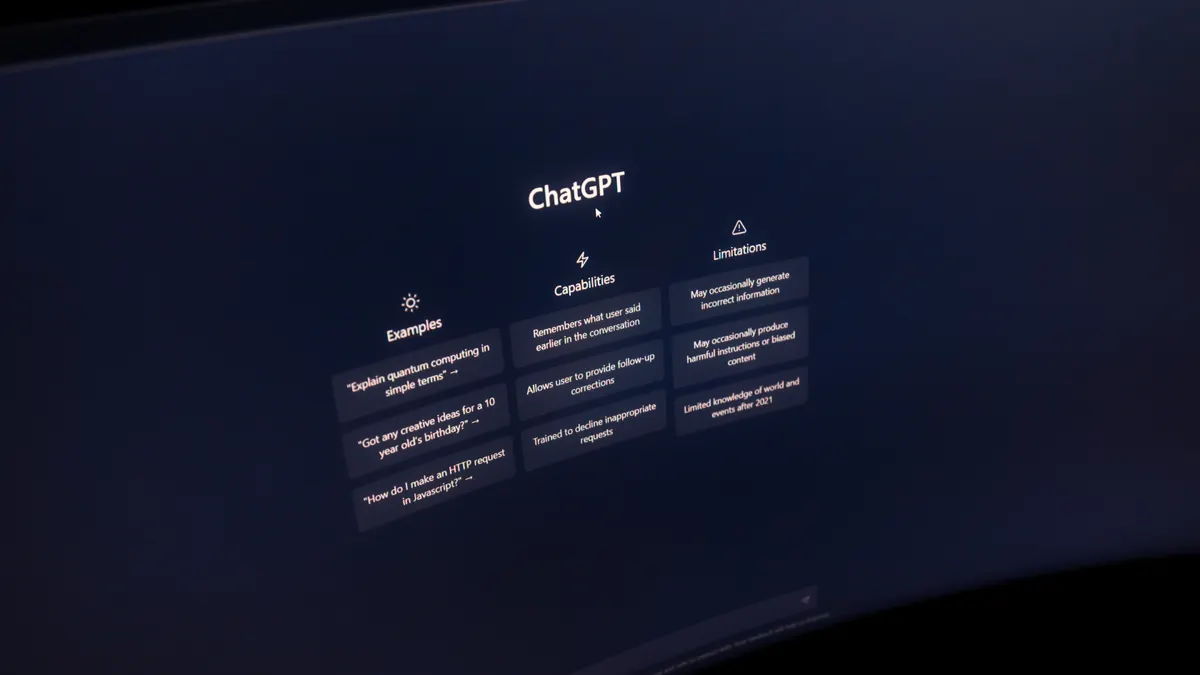
ChatGPT is built to generate text, reorganize information, and answer prompts quickly, which makes it useful for SEO tasks that start with words rather than measurements. OpenAI’s product pages describe it as a general-purpose assistant, not an SEO tool, so the real question is not “can it write?” but “can it write in a way that survives an editor and a search result page?” A practical example is simple: it can produce 10 title ideas or 5 meta descriptions in one pass.
SEO work splits into two jobs. One is creative output; the other is evidence handling. ChatGPT handles the first part well enough for drafts, briefs, and variations, but it is much weaker on the second part, especially when the task needs current rankings, exact search demand, or a confident claim about what Google prefers. Google’s own Search Central guidance on helpful content and E-E-A-T-style quality signals makes that gap more than cosmetic: content needs to show real value, not just fluent sentences. For a page that needs 1 strong angle and 1 clear intent, that difference is decisive.
Because of that, the practical use case is narrow but real. We would treat ChatGPT as a production tool for the middle of the workflow: after a keyword, audience, and page goal are already chosen, but before the draft is fully shaped. It is useful for spinning out H2s, rewriting stale intros, summarizing long notes into a cleaner brief, and creating alternates for title tags and descriptions. It is less useful for deciding what deserves a page in the first place.
Where it wins, with the numbers

Speed is the headline here. ChatGPT wins on first-draft pace, structure, and repetition, and that is exactly where many SEO teams lose time. OpenAI’s consumer and business plans have changed over time, so we will not pin the product to a price here; what matters is that the tool is available in multiple tiers, including chat access and team-oriented workflows, which makes it easier to slot into a small content process or a larger editorial pipeline. OpenAI has also added business-focused controls over time, including team and enterprise features, which makes it more practical for managed workflows than it was in earlier releases.
The strongest evidence for its value is not a benchmark score but the nature of the task it handles well. It can produce multiple versions of the same page element in one session: 10 title ideas, 5 meta descriptions, a page outline, FAQ questions, and a cleaned-up draft from rough notes. That is exactly the kind of work that burns writer time without necessarily improving quality. For a page that needs 1 strong primary angle and a few supporting blocks, ChatGPT can turn a blank page into a usable draft in minutes rather than hours. In a 30-page content batch, that time saving can be material.
It is also good at pattern recognition across text. Feed it a page brief that includes the target term, audience, intent, and three competitor URLs, and it can often produce a plausible content map: which sections belong near the top, where a comparison table fits, and which questions deserve a FAQ. That does not mean the map is right, only that it is fast. For SEO teams that already know what a useful page should look like, speed is a legitimate advantage. For example, a brief with 3 competitors and 1 primary keyword is enough for a rough outline.
Scale is the other place it wins. ChatGPT is useful when a site has 30 similar service pages, 50 local landing pages, or a backlog of rewritten titles and intro paragraphs. It can keep formatting, tone, and terminology aligned across a set of pages better than a tired human editor can. Schema.org’s structured-data patterns and Google’s page-quality guidance both reward consistency, and ChatGPT is good at repetitive consistency in a way that saves editing time. For teams handling 50 or more near-duplicate pages, that matters.
Pros
- It can turn one page brief into several usable copy options, so a writer spends less time on blank-page friction and more time on judgment.
- It handles repeatable SEO chores well, such as title variations, meta descriptions, FAQs, and section rewrites, which is enough for large page sets.
- It can keep terminology consistent across similar pages, which helps when a site has service or location templates with the same structure.
- It is useful for outlining before drafting, which means the writer can spot missing sections early instead of after a full draft is already written.
Cons
- It does not know your actual rankings, crawl data, or conversion data unless you provide them, so it cannot replace Search Console, analytics, or a content audit.
- It can sound confident while being wrong, which means every factual claim still needs human verification before publication.
- It is weak at judging search intent from live SERPs, so it can miss the difference between a comparison page, a how-to, and a transactional page.
- It can overproduce generic phrasing, which means the first draft often needs a hard editorial pass to stop it from sounding like every other AI page.
Buy this if you need a fast drafting assistant for SEO pages, briefs, and repetitive copy blocks. Skip it if you need an autonomous keyword researcher, a facts engine, or a tool that can safely publish without a human editor. Our SEO content audit checklist shows where that human review still matters.
What ChatGPT gets wrong for SEO
ChatGPT gets the hardest SEO jobs wrong for a simple reason: SEO is not just writing. It is writing under constraints that come from search intent, SERP shape, entity relationships, canonicals, internal linking, and the risk of saying something untrue with confidence.
Currentness is the biggest weakness. A model can summarize general SEO concepts, but it does not inherently know this week’s search results, a recent algorithm shift, or whether a rival page has changed format. For SEO, that matters more than style. If the live SERP is dominated by comparison posts, a product page will underperform no matter how smooth the copy is. If the query has a fresh-news bias, a static evergreen article can miss the target entirely. ChatGPT cannot see that on its own, and a 2024 ranking update or a 2025 competitor refresh can change the answer fast.
The second weakness is source handling. It can draft citations and summaries, but it is not a citation manager. Ask it for support on a claim, and it may produce something that sounds plausible and still be wrong, incomplete, or too vague to publish. That is a problem for SEO because trust signals come from careful claims, not from volume. Google Search Central repeatedly stresses usefulness and reliability; a polished paragraph with a shaky source is still shaky. For claims about price, ranking, or market share, we would verify against the original source before publishing.
Intent drift is the third weakness. ChatGPT often writes for the prompt, not the query ecosystem. So it can give you a high-level explainer when the searcher wanted a checklist, or a listicle when the searcher wanted a buying guide. This is especially risky on commercial SEO pages, where the difference between “best,” “review,” “alternatives,” and “vs” changes the entire page shape. A human who has checked the SERP can spot that. ChatGPT often cannot unless the prompt is very specific. The same risk shows up in page type selection, which is why we keep search intent mapping and SERP analysis separate from drafting.
There is also a quiet problem with originality. ChatGPT can make competent copy that is structurally correct and still generic. Generic SEO pages are easy to find, easy to skim, and easy to ignore. That matters because the web is already full of pages that repeat the same definitions and the same “why it matters” paragraph. If the content does not add a concrete detail, a real comparison, or a specific example, it does not deserve to rank for long. A page with no specific evidence is usually a page with no lasting search value.
Pros
- It can explain basic SEO concepts clearly, which helps junior writers or clients who need a plain-language brief.
- It can rephrase the same idea in several tones, which helps match page sections to different audiences.
- It can make rough notes usable, which is valuable when the source material is messy or incomplete.
- It can spot structural holes in a draft, such as missing FAQs or weak transitions, which can improve readability.
Cons
- It cannot verify facts on its own, so any statistic, date, or technical statement still needs checking against a reliable source.
- It may flatten nuance, which is a problem when the difference between two intents is the difference between ranking and missing.
- It can produce “safe” SEO prose that reads fine but adds no new information, which wastes crawl and reader attention.
- It can mirror outdated advice if the prompt is vague, so the output can lag behind current guidance from Google or industry standards bodies.
ChatGPT for SEO review: strengths and limits in practice
ChatGPT is strongest when the task is bounded and the quality standard is explicit. If we had to use it on an SEO workflow, we would start with three jobs: outlining, variant generation, and cleanup of already verified material. It is weakest when the task demands live evidence, judgment from search results, or a confident recommendation based on current market conditions. That is why the review itself has to separate writing speed from publishing risk.
Here is the practical split: the tool acts as an editing accelerant, not a strategy engine. It can help turn a content brief into a draft with the right bones. It can help reshape headings so a page reads more cleanly. It can help a team keep tone consistent across a set of pages. But it cannot decide whether a page should exist, what intent it should satisfy, or whether the source material is good enough to support publication.
For SEO teams, that creates a simple division of labor. Humans should own keyword selection, intent mapping, entity coverage, fact checking, and final approval. ChatGPT should own the parts that are mechanical: first-pass drafting, alternates, summaries, and reorganizing notes into readable sections. The more a task depends on judgment, the less the model should be trusted to lead it. That is especially true when a page depends on dates, prices, or policy details.
The most useful way to judge the tool is by the error it saves, not the sentence it writes. If it saves 30 minutes of draft time but forces 30 minutes of correction later, the gain disappears. If it shortens the path from outline to publishable draft while leaving fact checks and SERP analysis in human hands, it earns its keep. That is the real standard for SEO use. In other words, the question is not whether it can write; it is whether it saves time without adding risk.
Pros
- It can shorten the time from keyword brief to structured draft, which matters when a site has a content backlog.
- It can produce multiple drafts of titles, meta descriptions, and headings, which makes testing and iteration easier.
- It can normalize style across a large site, which helps if many pages need similar formatting.
- It can help non-specialists get from idea to outline, which lowers the barrier for first-draft production.
Cons
- It can encourage publishing before verification, which is the wrong trade if accuracy matters more than volume.
- It can make mediocre briefs look finished, which hides weak strategy under polished prose.
- It does not replace live SERP review, which means a page can still miss the intent even when the copy is well written.
- It can overfit to the prompt, so a small wording mistake can produce the wrong kind of page.
Buy this if your bottleneck is drafting speed, editorial cleanup, or repetitive page production. Skip it if your bottleneck is poor keyword strategy, weak source quality, or a team that needs a truth-checker more than a writing assistant.
What stands out
ChatGPT is broad, fast, and easy to place in a content workflow without specialized setup. It does not need a schema plugin, a keyword database, or a developer handoff to start helping. For many SEO teams, that simplicity is the point, especially when they need 1 tool to cover multiple content steps.
It also crosses page types without much fuss. A product comparison page, a service page, and a FAQ block all ask for different prose, but the same model can draft each one. That makes it unusually versatile for teams that do not want a separate tool for every stage. The model’s flexibility is one reason it shows up in briefs, draft generation, internal page outlines, and cleanup passes. In a site with 20 or 200 pages, that flexibility adds up.
The strongest case for ChatGPT is not that it writes “better” than a human. It is that it removes blank-page time and speeds up the dull middle of the process. That middle is where many SEO projects stall. A tool that gets us from idea to editable text quickly has real operational value. It can shave 15 to 30 minutes off a routine page draft, which matters when the queue is long.
Pros
- It fits into many SEO tasks without setup overhead, which helps small teams move faster.
- It works across page types, so one tool can assist with briefs, drafts, FAQs, and rewrite tasks.
- It is useful for consistency, which matters when a site has many similar pages.
- It reduces blank-page friction, which can turn a stalled workflow into a working draft.
Cons
- It is not a specialist SEO platform, so it will not replace keyword tools, crawlers, or analytics systems.
- It can create the illusion of progress before the page is actually useful, which is dangerous in content operations.
- It needs strong prompts and strong editing, which means the time saved depends on the team’s discipline.
- It is broad rather than precise, so it is less useful for niche technical SEO problems.
How it compares to a human editor and a dedicated SEO tool
ChatGPT is not a replacement for a human editor or a dedicated SEO platform, and that is the cleanest way to understand its place. A human editor brings judgment, topical understanding, and accountability. A dedicated SEO tool brings data: search volume, crawl issues, rank movement, backlink profiles, and content gaps. ChatGPT brings speed, and that speed is useful only when the other two are still in the loop.
In practice, the three tools solve different problems. ChatGPT helps us draft 1 page faster. An editor helps us decide whether the page is worth publishing. An SEO platform helps us decide whether the page deserves to exist at all. If those roles blur, quality drops quickly. A workflow that keeps them separate is usually safer and easier to scale. For example, a content team might use ChatGPT for a first draft, an editor for fact-checking, and Search Console for performance review.
The comparison also explains why ChatGPT can feel impressive in a demo and underwhelming in production. In a demo, speed is obvious. In production, the missing pieces matter more: source quality, intent match, and whether the page actually answers the query better than the competitors on page 1. Those are not writing problems alone. They are editorial and analytical problems. That is where human review and SEO tooling still carry the load.
Pros
- It is faster to start than most SEO platforms, which helps when the first draft is the blocker.
- It can transform notes into structure, which is useful before an editor begins.
- It can produce copy variations quickly, which makes it easy to test alternatives.
- It can support the writing stage without requiring technical setup.
Cons
- It does not provide the data that SEO tools provide, so it cannot stand in for research or measurement.
- It does not replace editorial judgment, which means a bad page can still look polished.
- It can blur the line between draft and decision, which is risky in teams with weak review processes.
- It can miss the commercial or technical nuance that specialized tools and experienced editors catch.
Bottom line
ChatGPT for SEO review: strengths and limits can be summed up in one sentence: it is a useful drafting assistant and a poor substitute for SEO judgment. OpenAI’s product docs and Google’s guidance both point in the same direction: use it where language is the bottleneck, not where evidence or strategy is the bottleneck. For teams that keep that boundary clear, it can save real time; for teams that do not, it can save minutes and cost rankings.
Drafted with AI; not yet reviewed by a person.